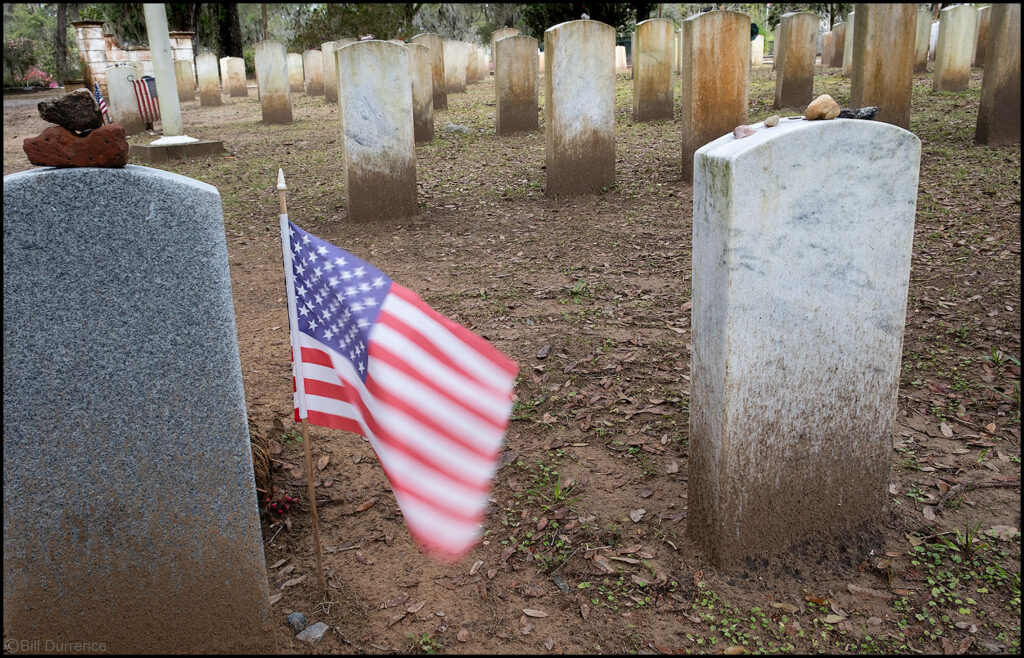
“We hold these truths to be self-evident, that all men are created equal, that they are endowed by their Creator with certain unalienable Rights, that among these are Life, Liberty and the pursuit of Happiness.–That to secure these rights, Governments are instituted among Men, deriving their just powers from the consent of the governed,….”
Of all the American anthems–“Star-Spangled Banner,” “God Bless America,” etc.–my favorite is “America the Beautiful,” especially the second verse (especially with Ray Charles singing it):
O beautiful for heroes proved In liberating strife, Who more than self their country loved, And mercy more than life! America! America! May God thy gold refine Till all success be nobleness And every gain divine!
Happy Birthday to the USA, with gratitude for the Founders who gave us an audacious idea, and the millions since who have risked their lives, fortunes, and sacred honor believing, supporting, and serving that idea, in countless ways.
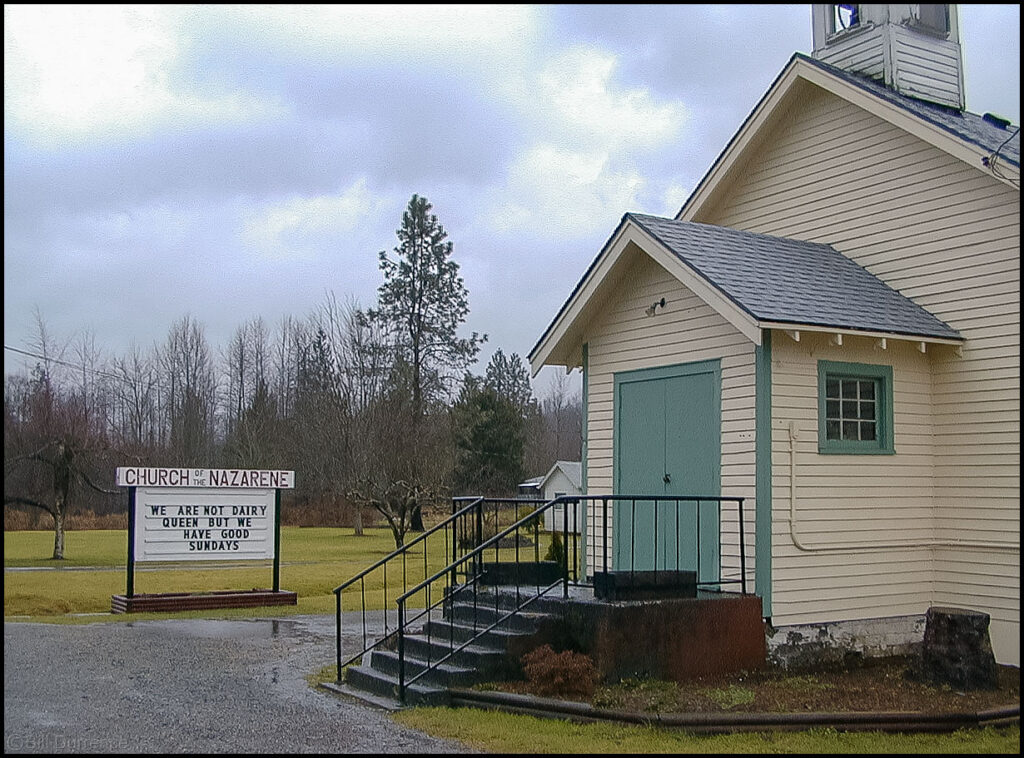
You have to appreciate someone so comfortable in their work that they can publicly toy with the thin line between clever and corny.
Like last week’s post, this photo was from playing with early digital capture during some free time in the Cascades. My “experimenting” time had been cut short by catching a bug on the way to Seattle, and spending the first couple of days sick in my cheap rural motel room, pleading with the restaurant next door to bring me a meal. (They did.)
Once I was up and out of my room, discovering someone offering levity was a tonic, even with the moody weather.
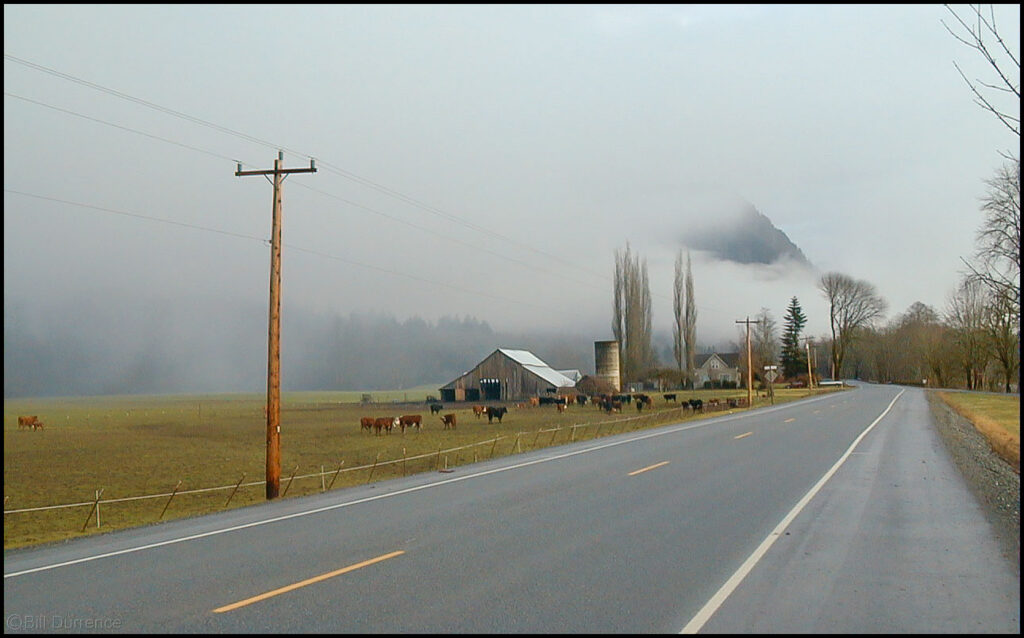
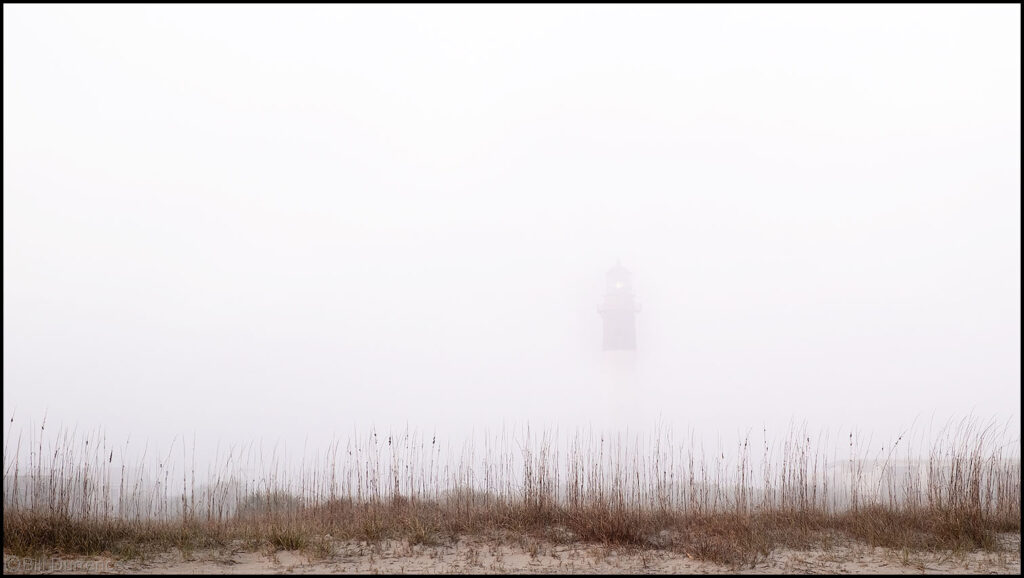
I could give several reasons why I think this is a nice photograph, but it’s enough to just say, “I like it.”
There is a softness to it that, I think, helps generalize the scene from a specific place to something more than….
I’m not saying I had that sort of insight/ambition in making the photograph, in January of 1999. We had bigger things to worry about back then, with the countdown to Y2K Armageddon running.
This was just me playing with one of the new point-and-shoot digital cameras (the Nikon CP-900) during some free time in the Cascades, trying to get a feel for this budding technology, and the tools for using it. Compared to the high resolution sensors today, with the detail they capture, the early sensors were pretty poor quality. The thing I like most in this photograph is the limitation I probably bemoaned at the time. Go figure.
The thing that was immediately evident was the attraction of/addiction to seeing one’s photographs immediately; of knowing right then if you got what you wanted, or could re-shoot. And to be able to share widely, easily. Remember: we are the generation that was thrilled to pay a premium to get our pictures processed in one hour. What’s not to love about instant gratification?
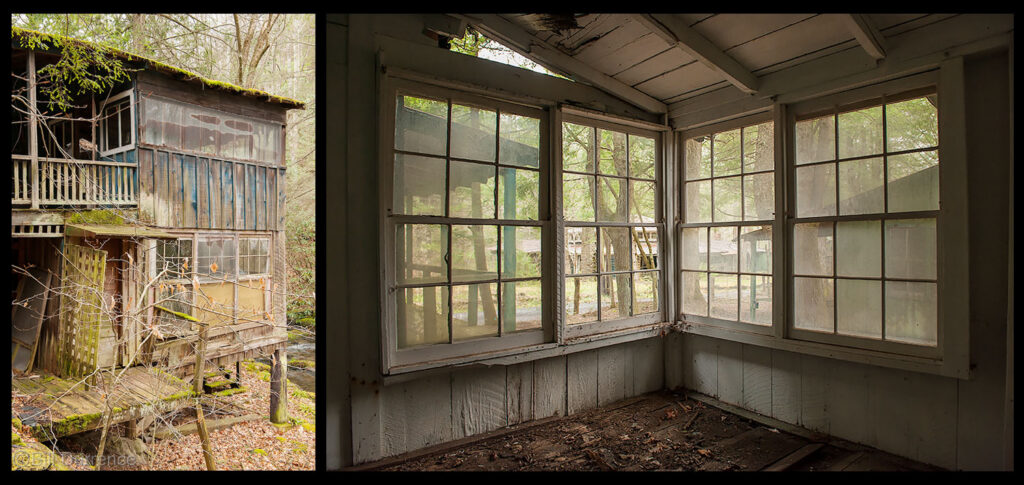
Layne Kennedy, an excellent photographer, is a friend and former colleague from teaching the Mentor Trek workshops for “Popular Photography.” He recently posted a photo of an almost contemporary modern ruin from a Russian mining town that was abandoned, leaving everyday articles laying around, and it reminded me of Elkmont, TN.
Elkmont, now inside the Great Smoky Mountains National Park, started as a logging community, and later became an elite level resort. When the Park was created current owners were allowed to keep their property, but by 1992 that changed, and the area was emptied of residents and businesses. Originally all the structures were to be demolished, but with some on the National Historic Register, there was an agreement in 2009 to restore some of them. I haven’t been back since 2008, so I don’t know what the status of any of that is now.
It’s fascinating to see places like this, or Layne’s village where it feels like everyone got up one morning and just left, and interesting to see what was left behind, discarded. I found a similar personal situation a few years ago when I sought out an old dwelling in the countryside west of Savannah, where my father’s family had large reunions when I was a kid.
Knowing the intense heat and humidity coming over the next 2-3 months, my thoughts turned to cooler times.
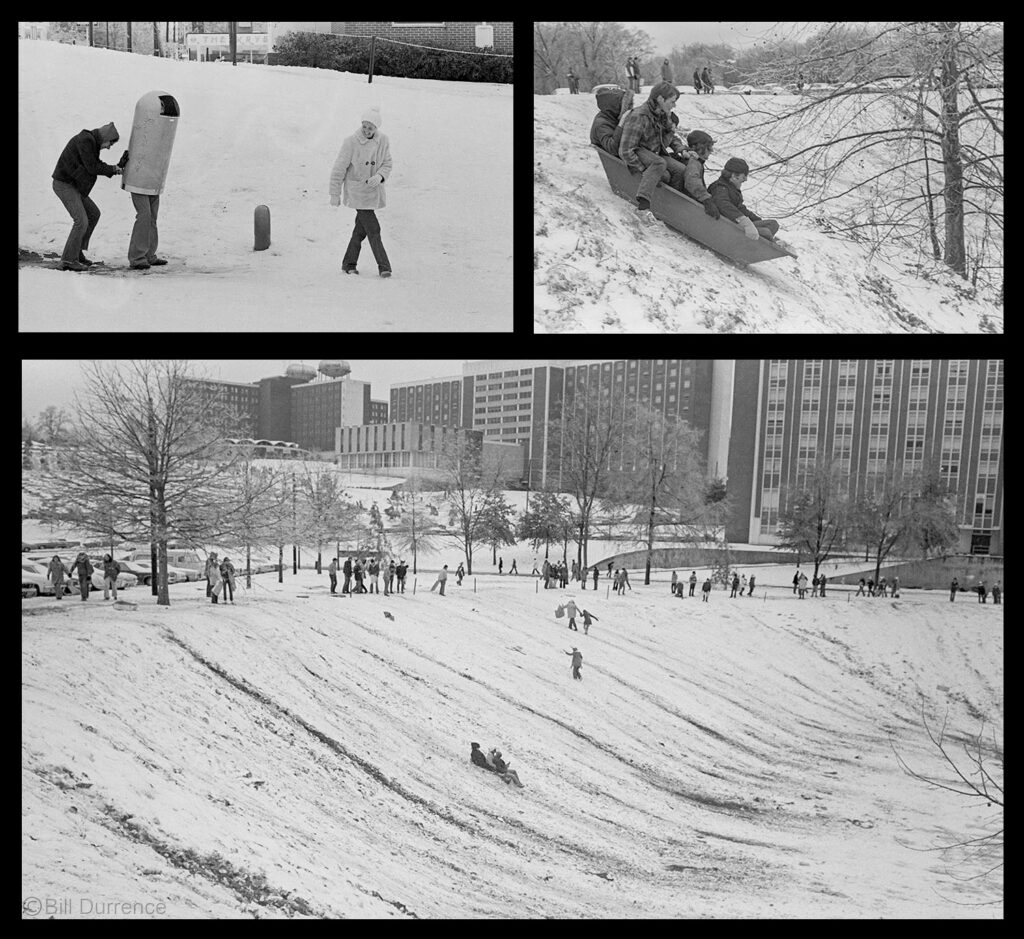
When I was at the University of Georgia (GO Dawgs!) Athens seldom got even a hint of snow, but there was one time when it covered the ground (mostly) and lasted through a good part of the day. Such an unusual event put an end to classes for that day while everyone played.
The rareness meant no one had a sled, but innovation was rampant–from large cardboard flats, to cafeteria trays, to tubs, to whatever inane thing the guy in the top left photo is trying to do.
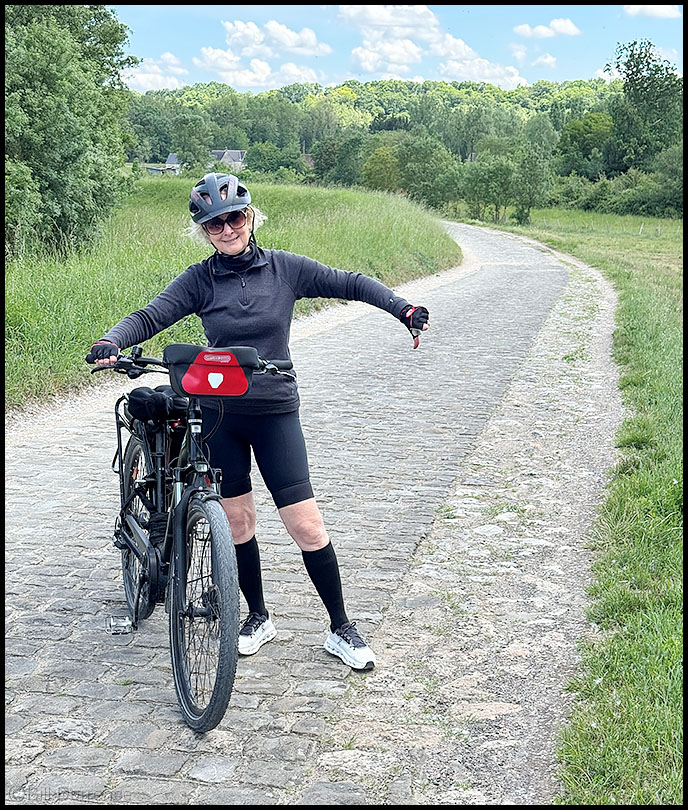
Barbara and I recently finished another self-guided bicycle tour, this time through a portion of the Loire Valley. Our goal was to see some countryside, see (and stay at) some fabulous chateaux, eat well, and drink some wine. Mission accomplished, but with a secondary, unexpected, thread–a Tomb Tour of sorts.
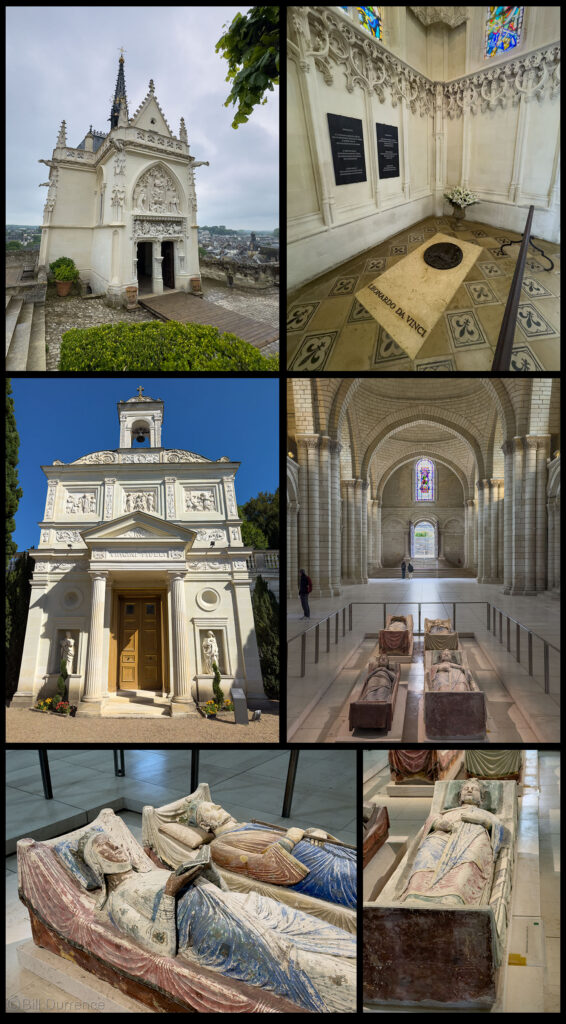
Starting in Amboise, we found the Chateau du Clos Luce’, where Leonardo da Vinci spent the last three years of his life, working and running a school, under the patronage of King Francis I. He died there and is buried nearby in a chapel at the Amboise Chateau Royal. (Top two photos)
In Saint Patrice we stayed at the Chateau de Rochecotte (just..wow!) where the area just outside our suite’s patio door was next to this Chapel memorializing Prince Talleyrand. (Middle left photo)
At the last stop on our ride we stayed at the Abbaye Royale de Fontevraud, discovering in the chapel there the tombs of Eleanor of Aquitaine, Henry II, and Richard I (the Lionheart).
Have you ever realized you know of something, but don’t really know anything about it? That was my take on Eleanor, so I looked her up. Pretty impressive lady. She inherited Aquitaine, the largest and richest section of France (bigger and richer than the territory controlled by the King), and became the Duchess at 15. She married Louis VII in 1137, and became Queen of France for 15 years.
Having no male heirs they got an annulment in 1152 and she hooked up with Henry, Duke of Normandy, marrying him later that year, and in 1154 he became King of England, and she, Queen. Two of their sons, Richard the Lionheart, and John, eventually became Kings of England.
Before that, when two of their sons, including Richard, revolted against their father the King, she supported them, and was imprisoned by her husband for 16 years.
But, she had the last word, living to the age of 80, outlasting them all. She had Henry II (husband, with her in bottom left photo) and Richard 1 (son, bottom right photo) buried at her place in Fontevraud Abbey.
One of the things I enjoy about travel is seeing/doing things I’ve been interested in, and planned as part the trip. Often, even more pleasure comes from the unexpected encounters with people, history, landscapes that teach me something I was not anticipating. Like Magellan, Columbus, or Lewis and Clark, I travel to see what I might discover, even though it may be something everyone else already knows.
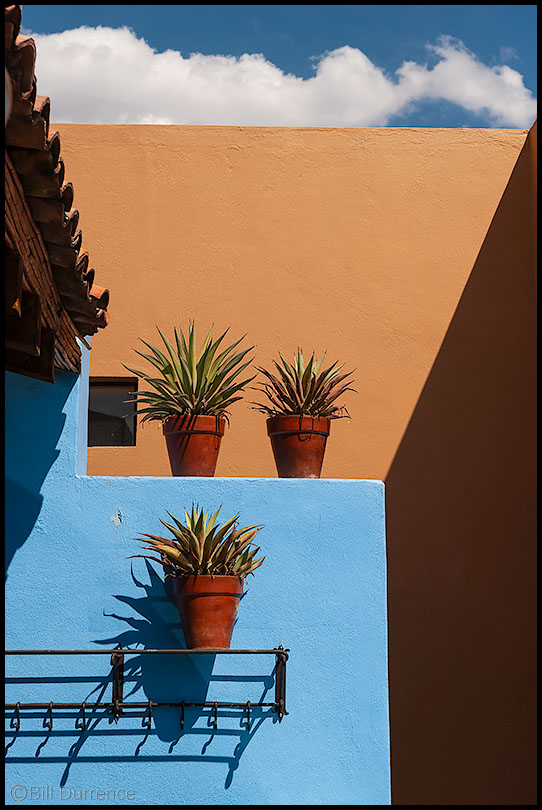
I’ve mentioned in previous posts that Edward Weston was an important influence on me. The strong sunlight/shadow in this courtyard made me think of some of his work from the time he spent in Mexico.
His work was Black & White, but I think the simple shapes/patterns and color scheme might be the way he would have seen this today, about a hundred years, and a little technology, later.
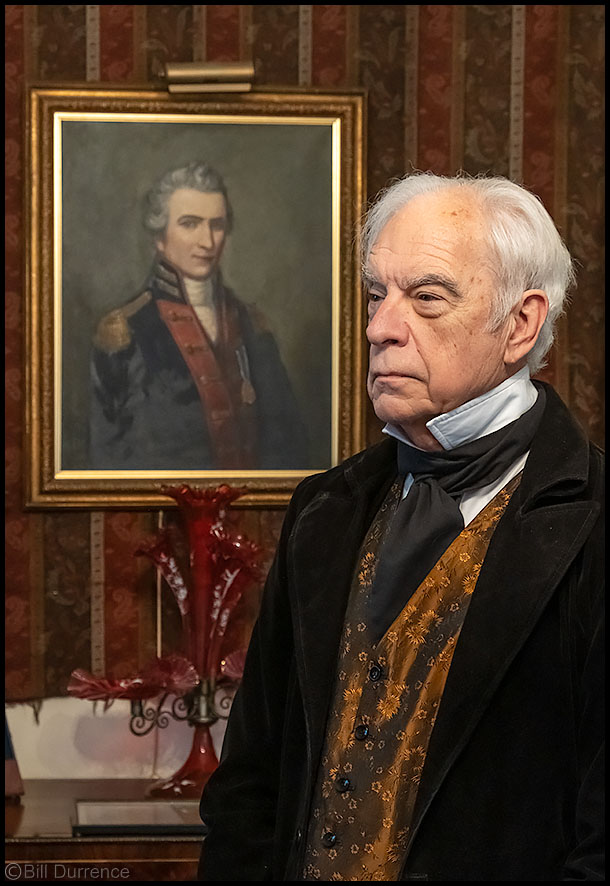
I had an old friend/photographer who, when talking about making pictures, would say, “Look deep.” It was his way of saying watch backgrounds; they can distract from or support the main subject, and are seldom neutral.
In making portraits of people or animals there can be a tendency to frame tightly around the face, or head and shoulders, and those compositions can effectively show what the subject looks like. But do they tell you anything else? By opening the frame up a bit, some added detail can imply ‘background’ information about the subject, telling a story. How much ‘a bit’ is, is about balance. Too much/too busy and the subject is overwhelmed, instead of being the dominant figure.
I was photographing some docents in period costumes at the Green-Meldrim House, maybe best known as the Savannah headquarters for General William T. Sherman at the end of his March to the Sea. I noticed the painting behind my model, and including that offered a suggestion of an important ancestor, or maybe my actor as a younger man. By having each portrait looking into the center of the frame, and toward each other, I kept the design cohesive. Of course in this case any imagined stories are fantasy, but they offer a more layered, complex presentation.