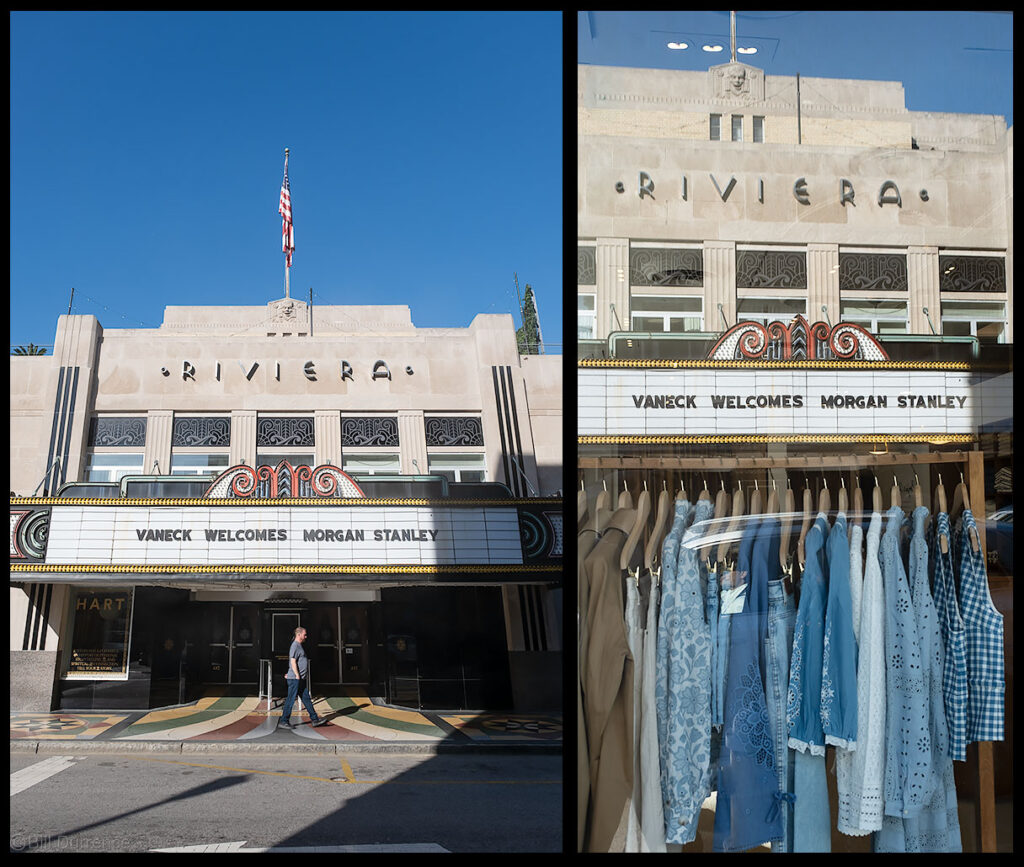
I recently assisted my old friend and teaching colleague Reed Hoffmann with a small group photo trip he did in Savannah, and part of the program was a day in Charleston. We drove up early and spent much of the morning walking around the peninsula. First coming out of the parking garage, on arrival, we saw the Riviera, a restored Art Deco theater, and most of the group made some sort of photograph of the building.
Me too. The light was nice and showed off the building details well. But that’s also the same photo every casual observer will make with their cell phone. My question to the group was, “Can you find a different way of seeing this?” Not instead of, necessarily, but also. You can always decide which you like best later, or even change your mind, if you have choices.
After taking the obvious shot of the building, I looked behind me, at the juxtaposition of the reflection of the theater with the merchandise in the shop window. By careful framing I was able to “hang” the clothes from the marquee. In processing the image I flopped the photo horizontally so the text reads correctly.
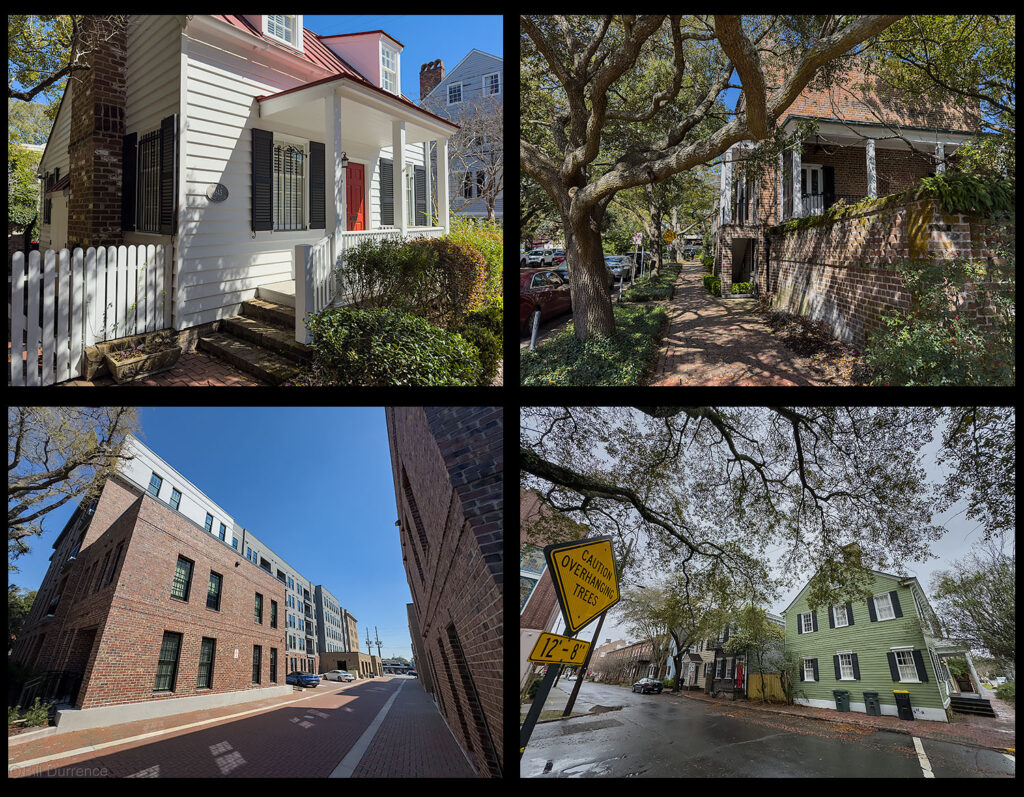
An appropriate response to the question, “What is the best camera?” is, “The one you have in your hands.” It’s the only one you can use in the moment. (These four images were made with a cell phone.)
Another oft-asked question is, “What is your favorite subject?” While some shoots are more fun than others, it’s kind of the same response for me, “The one I have at hand.” Ansel Adams supposedly said, “A good photograph is knowing where to stand.” My goal is to find that spot.
I remember a Mechanical Drawing class at Myers Junior High School where I first learned about one (and two) point perspective, and vanishing points. I think that still influences the way I look at cityscapes.
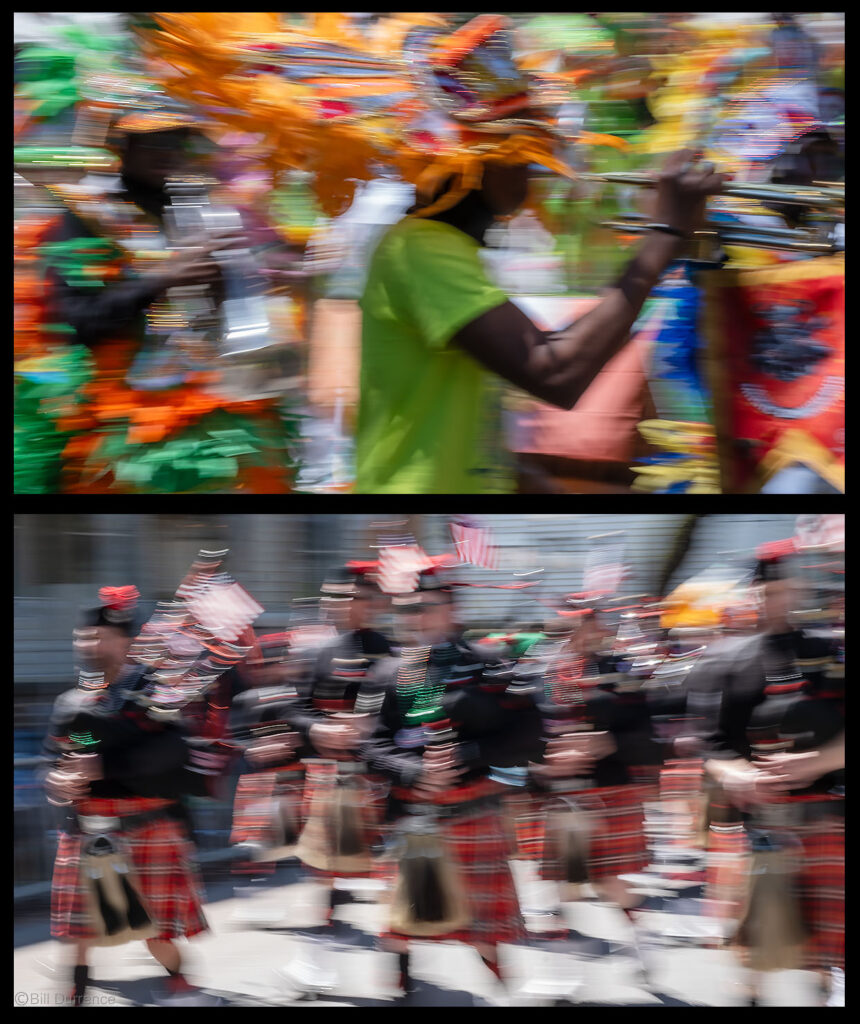
Once more, our annual bacchanal, Saint Patrick’s Day. A kaleidoscope of color–lush blooming azaleas and marching bands; noise–bagpipes and DJs. 202 years, missing only 8 for world wars and Covid.
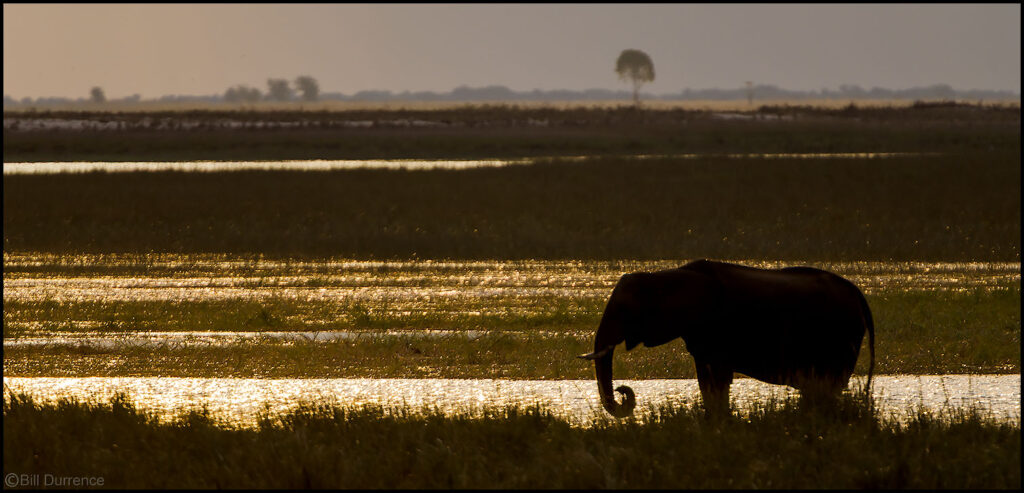
I pulled out an assortment of elephant photographs recently for a friend who likes elephants and was interested in purchasing a print. This was not the one he chose, but it is one of my favorites, now.
Our Botswana/Zimbabwe safari is one of so many trips or photo excursions for which I have never done a thorough edit. Looking for the elephant portfolio to show my friend led to me rediscovering this shot. Playing with editing helped me discover what I think I was “seeing” when I made it, although the original RAW, unedited file did not jump out at first.
We had previously done two safaris, both in east Africa (Kenya, Tanzania), so the trek to Botswana was very different visually. Where east Africa was mostly dry savanna, with really large herds of wildebeest interspersed with zebras, or mobs of Cape Buffalo, Botswana has wetlands, woodlands (and the Kalahari Desert), and what seemed like smaller herds, although that could be partly an effect of a more limited horizon line. That added another useful compositional tool, et voilà.
Using editing tools to illicit what I wanted from the original image reminded me of a recent conversation.
One of the most important benchmarks in a photographer’s career is when he/she understands they have acquired the technical skills and knowledge of exposure, processing, editing to be able to create a relatively accurate representation of the tones in the scene being captured. Today that means learning how to read a histogram.
The real revelation is even bigger and comes later–recognizing that those same skills can be used, not to mimic reality, but to make those tones whatever you want them to be. Why not? A photograph of a person, place, or thing is not that thing itself but, at best, a limited facsimile. The photograph is something new and can be interpreted any way the photographer should choose.
The great thing about Ansel Adam’s Zone System wasn’t just that it gave you the exposure and development tools to reproduce a midtone in the scene accurately as Zone V. It also gave you the ability and freedom to reproduce that midtone as any other tone you chose.
“Gratitude is not only the greatest of virtues, but the parent of all the others.” Cicero
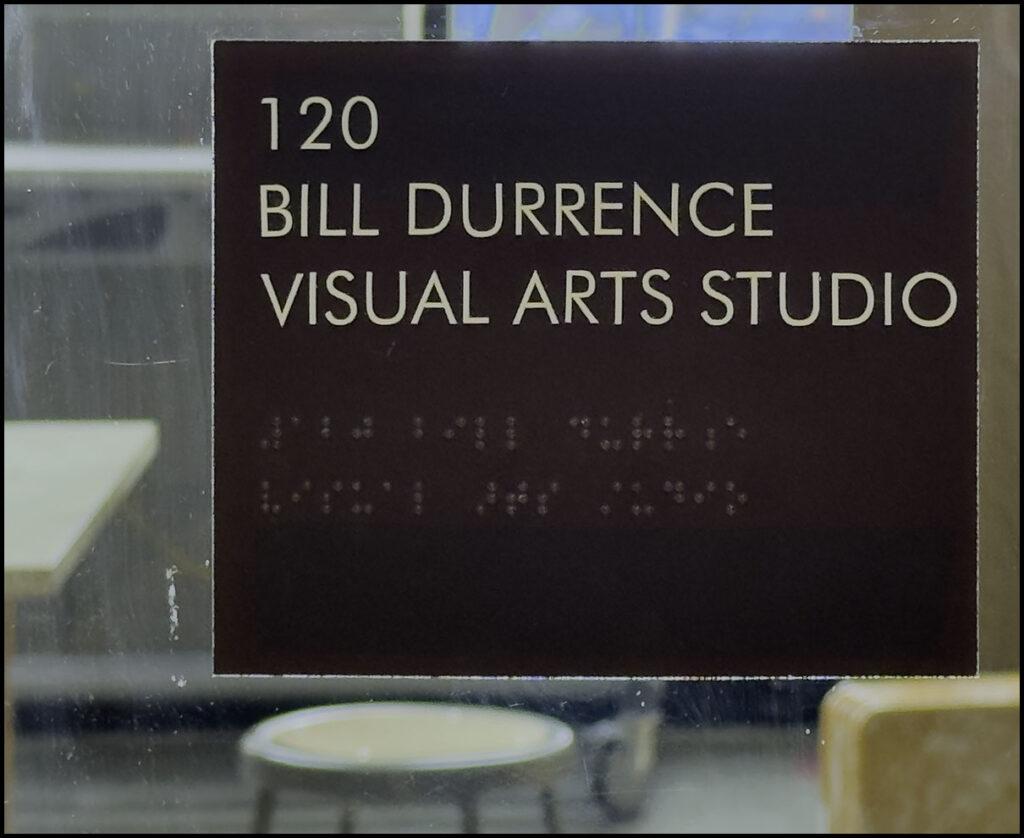
Last week, on February 23, the City of Savannah renamed the Visual Arts Studio 1 in the Dr. Otis S. Johnson Cultural Arts Center as the Bill Durrence Visual Arts Studio. It was an unexpected honor, for which I am deeply appreciative.
When I started working on this week’s post Barbara said don’t just document the event, say what you are feeling. Gratitude, certainly, but awkward as well, and I hope that does not seem to diminish my appreciation. I know a number of people whose contributions to this city deserve this sort of recognition, and being singled out is sobering for an inveterate skeptic. Never in my fairly long life did I imagine something being named after me. I am, by inclination and training, a watcher, a voyeur if you will. To be subject instead of observer is…Je ne sais quoi.
My understanding is this dedication was based on a combination of factors.
I am a native Savannahian. I became a staff photographer on our two daily newspapers in 1966, at the age of 18, where I routinely made many photographs, every day, from tragedy to sports to “society page” debutantes. At the time I had no idea of the education I was getting, but making pictures became a habit, and I’ve never stopped. I did not set out to create an archive, but the years rolled by, I got old, and all those negatives and slides and digital files became a collection.
For several years now I’ve been looking for a home for all those photographs after I’m gone, and I found it in the City of Savannah Archives, a historical collection that dates to the 1700s. I have gifted them my entire photo archive from over 60 years of shooting, and this recognition is a result of that, and having served on City Council for four years.
I want to thank Mayor Van Johnson, 2nd District Alderman (my old job) Detric Leggett, and City Manager Jay Melder for their support and kind words at the dedication. A special thank you goes to the City’s Archivist Luciana Spracher, who has gently led me through the trauma of moving all my slides and negatives out of my office and into hers, and created an approach to organizing and managing the files even though it is still a living archive, being grown and changed until I am no longer able do that.
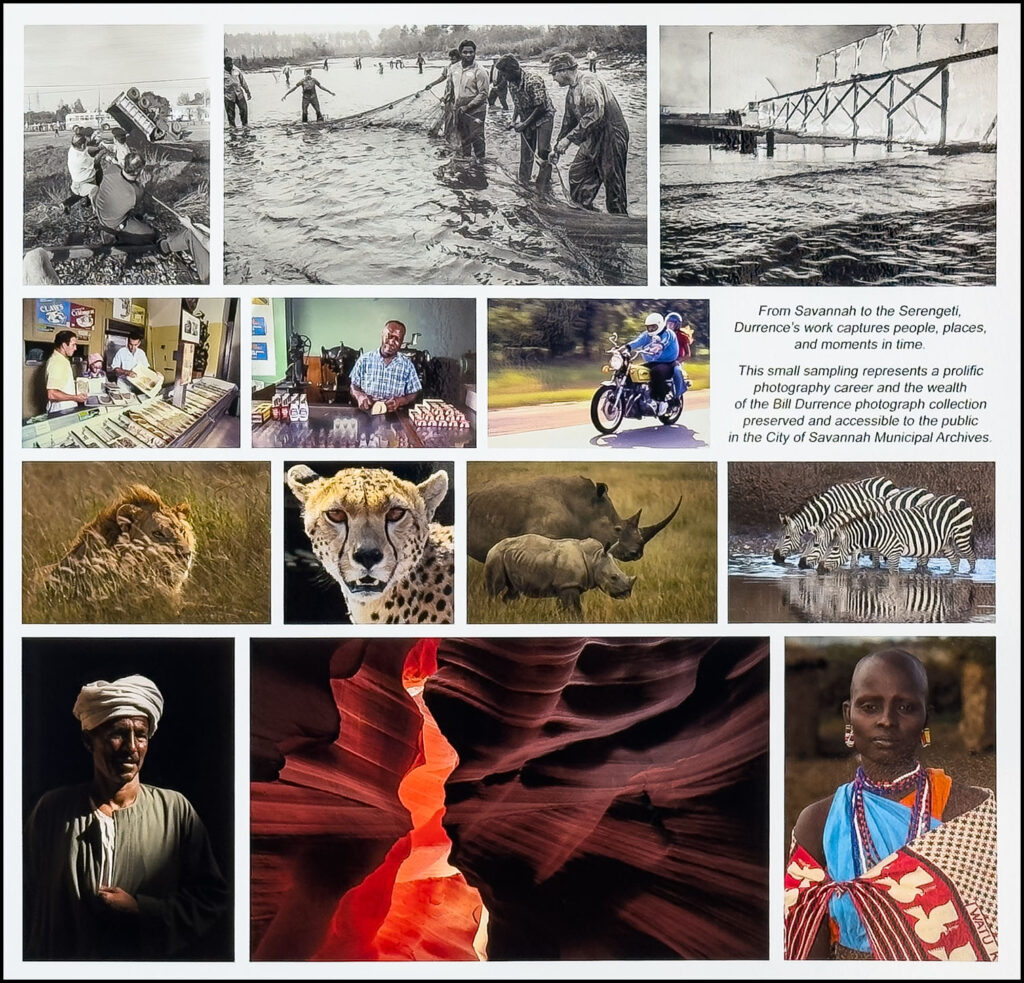
I wish she had been my editor at some of the publications where I’ve worked after seeing how she laid out several promotional pieces for this event, including the above collage that hangs outside the studio and represents a cross section of the variety of work I’ve done over the years.
What I am most grateful for is knowing all those years of work are now protected and in the hands of someone who will take at least as good a care of them as I tried to do.
Meister Eckkhart, a 14th Century German Catholic priest, theologian, philosopher and mystic said, “If the only prayer you ever say in your entire life is ‘Thank You,’ it will be enough.” The English poet John Donne said, “No man is an island.”
To all the shoulders I’ve stood on, to all those who have shared their visage with my camera, to the family, friends, partners, lovers, colleagues, students, teachers, mentors, and strangers whose lives have touched my life, for the gifts you’ve given me and the ideas and insights I’ve stolen from you…
To Barbara, my love, my partner for over 40 years, wise counselor, ruthless editor, generous patron, unwavering cheerleader, the person who took me on my first international trip, showed me how to travel, and gave me the world…